
ONDC: Everyone's Commerce
A Deep Dive into India's Open Network for Digital Commerce - Challenges and Opportunities


E-commerce has become an integral part of our daily lives. We often turn to platforms like Amazon or Flipkart when we need something. Even in small towns, people increasingly prefer online shopping over traditional markets.
While e-commerce has a strong presence in India, many retailers still struggle to join these platforms. In India, over 12 million people earn a living by selling or reselling products and services. However, only a tiny fraction, about 15,000 (0.125%), have embraced e-commerce. E-retail has remained largely inaccessible to most sellers, especially those from small towns and rural areas.
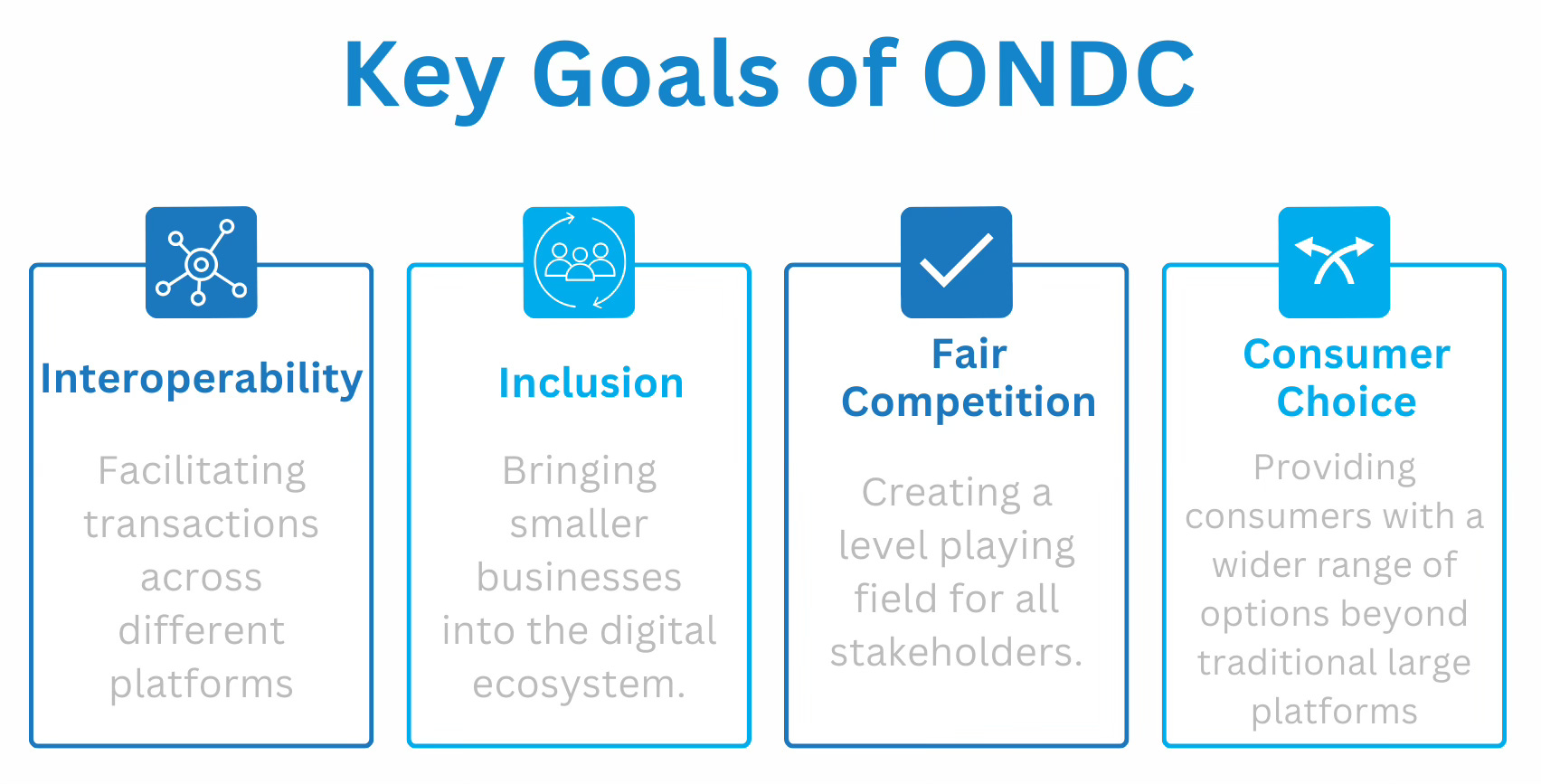
Currently, India accounts for 4.3% of the global e-retail market. To bridge the gap between sellers and consumers and boost India's e-retail penetration, the Indian government launched the Open Network for Digital Commerce (ONDC).
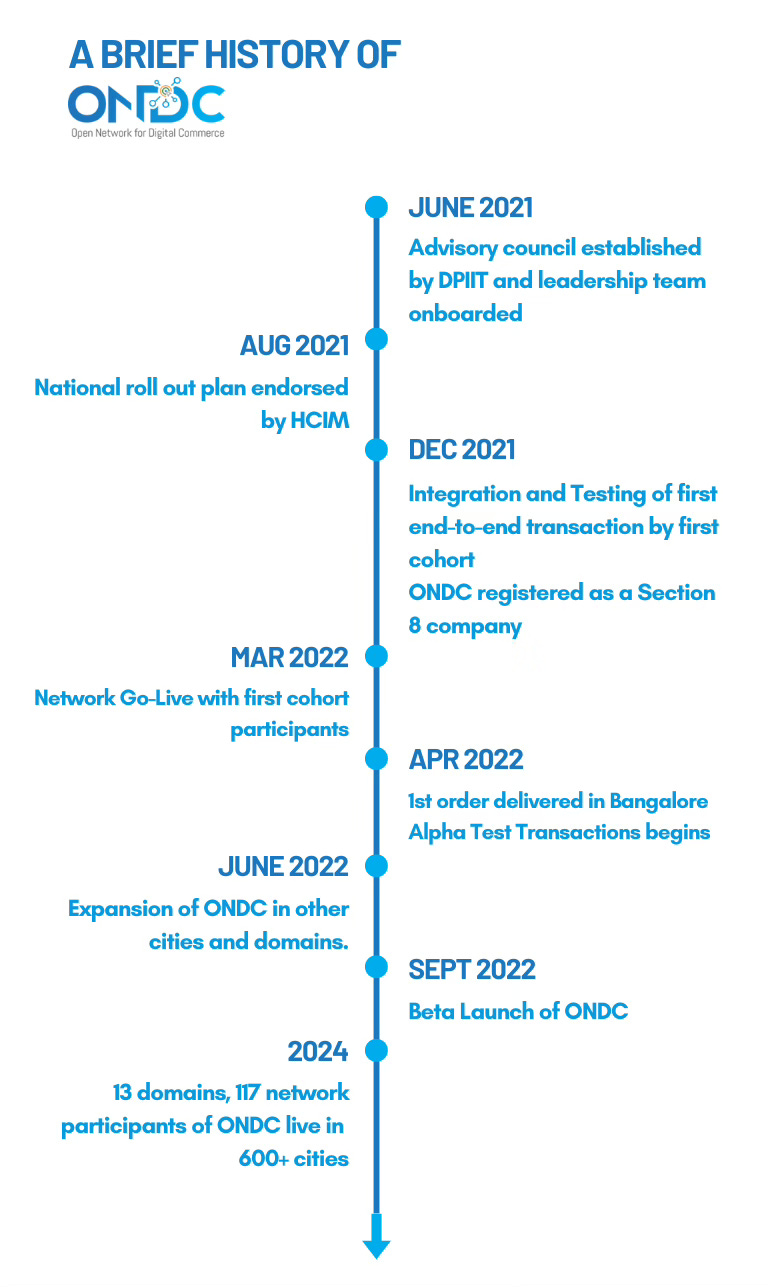
ONDC is part of the government's Digital Public Infrastructure (DPI) initiative. DPI aims to enhance efficiency, accessibility, and inclusivity through various digital systems and services. Examples include Aadhaar, UPI, Digilocker, and more. ONDC was established as a Section 8 company in December 2021, with the Quality Council of India and Protean eGov Technologies Limited as founding members.
A Section 8 Company is a non-profit organization registered under Section 8 of the Companies Act, 2013 in India. These companies are formed to promote charitable objectives like commerce, art, science, sports, education, research, social welfare, religion, environmental protection, and other similar purposes.
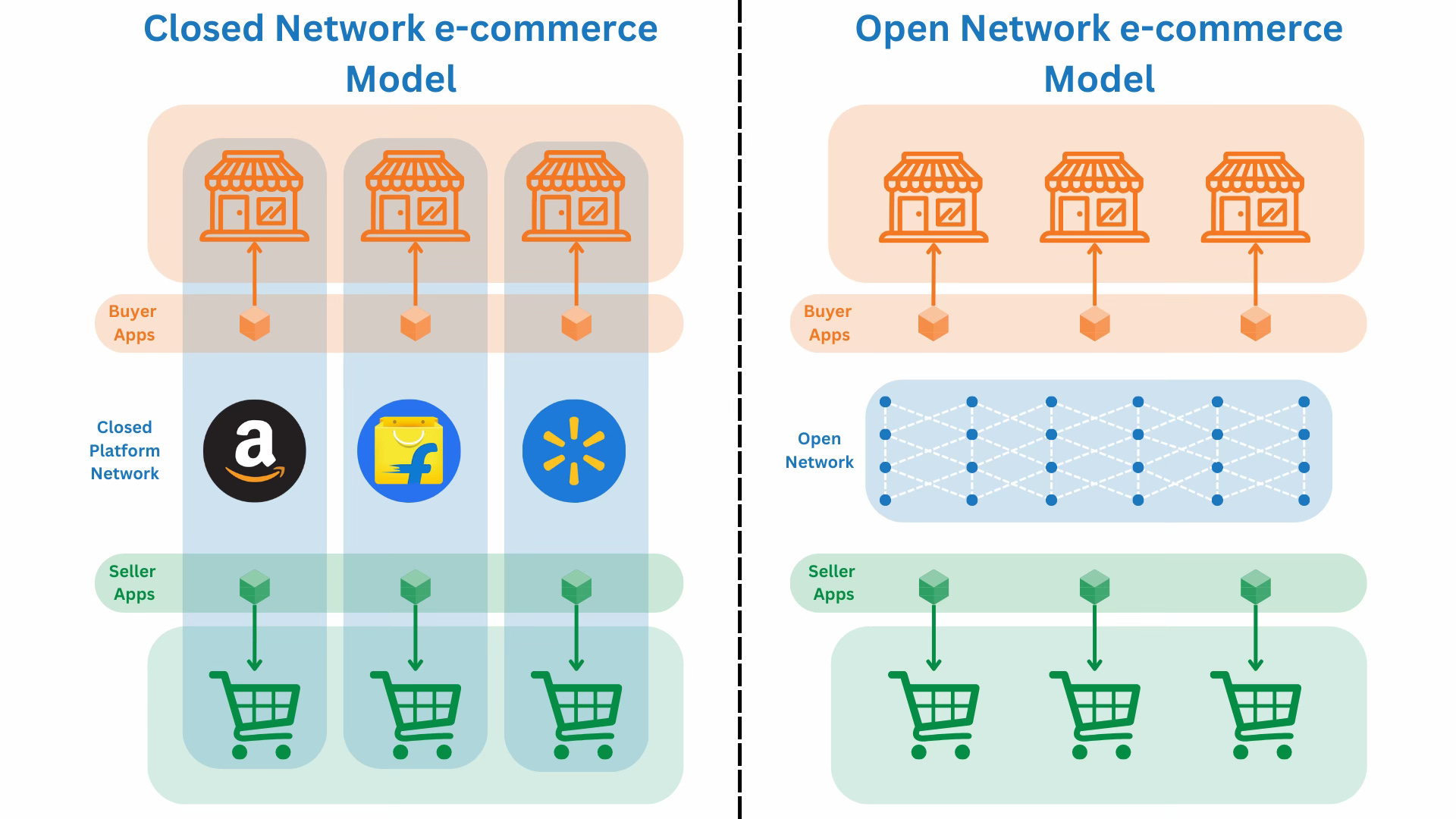
ONDC seeks to challenge the dominance of large e-commerce platforms by empowering small and medium-sized enterprises (SMEs), retailers, and local businesses to participate in the online marketplace. It separates the e-commerce process into distinct layers (discovery, ordering, and delivery), allowing different services to operate independently and interoperate. This means a seller on one platform can be found by buyers on another, while a separate provider can handle delivery.
User Roles
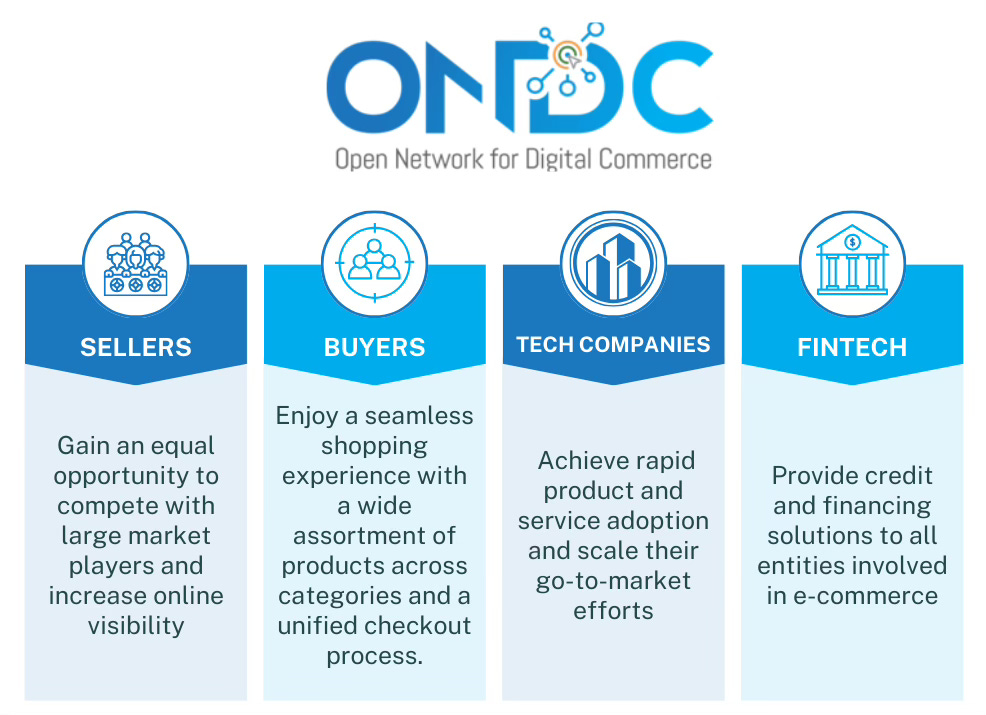
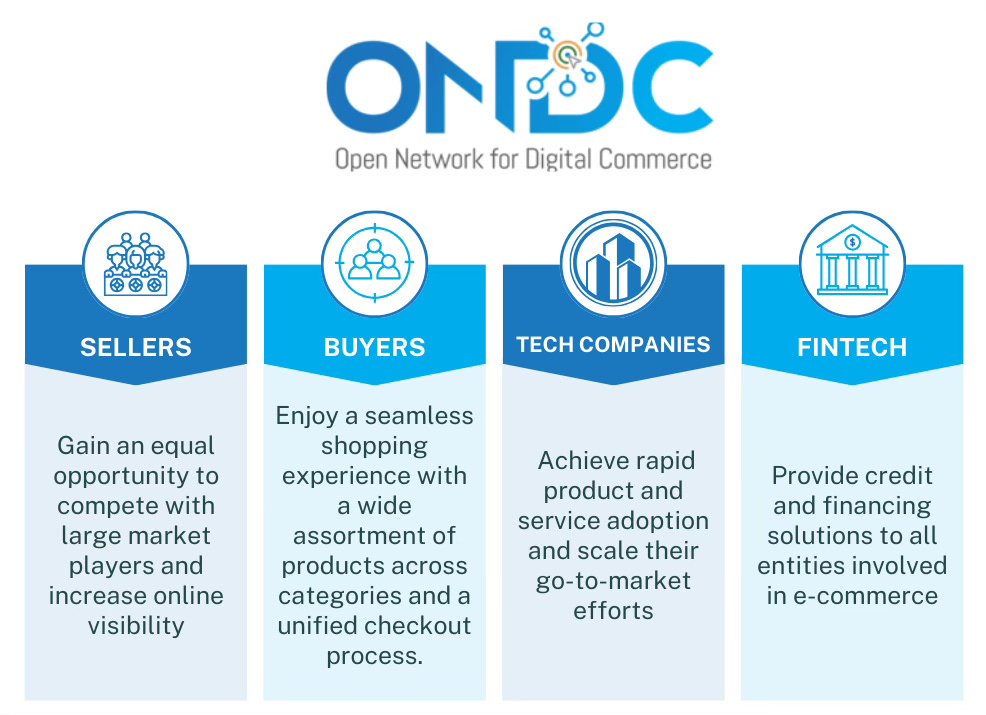
Buyer Network Participant: Connects buyers to the ONDC network through a buyer application. Provides customer support, ensures a seamless shopping experience, and offers a unified checkout process across categories. Examples include Paytm, Meesho, and Namma Yatri.
Seller Network Participant: Connects sellers to the ONDC network through a seller application. Digitizes seller catalogs, disburses payments, and trains sellers on e-commerce best practices to ensure quality fulfillment and positive customer experiences. Examples include Better Home, Boat, and Magicpin.
Marketplace Seller Node (MSN): Does not produce or manufacture inventory. Acts as a marketplace for goods and services provided by sellers.
Inventory Seller Node (ISN): An application operated by a seller who produces/manufactures, and sells its own inventory. Does not include products or services from other sellers.
Gateway: A technology provider that ensures all sellers in the ONDC Network can be discovered. Facilitates multicasting by forwarding search requests between buyer and seller applications. Enables manual searches by end consumers.
Technology Service Provider (TSP): Offers software applications as standalone solutions or cloud-based services. Enables seamless business operations on the network, empowering players to participate in e-commerce without in-house technology capabilities. Drives ONDC goals and attracts businesses of various sizes. Example: Zoho.
Technology behind ONDC
ONDC has built upon Beckn's technology and specification layers to develop network policies, trust mechanisms, grievance handling, and a reputation system.
Beckn enables decentralized marketplaces where users can access various services within a single app. For example, you could order food from any restaurant using just one app, instead of needing individual restaurants or food delivery apps.
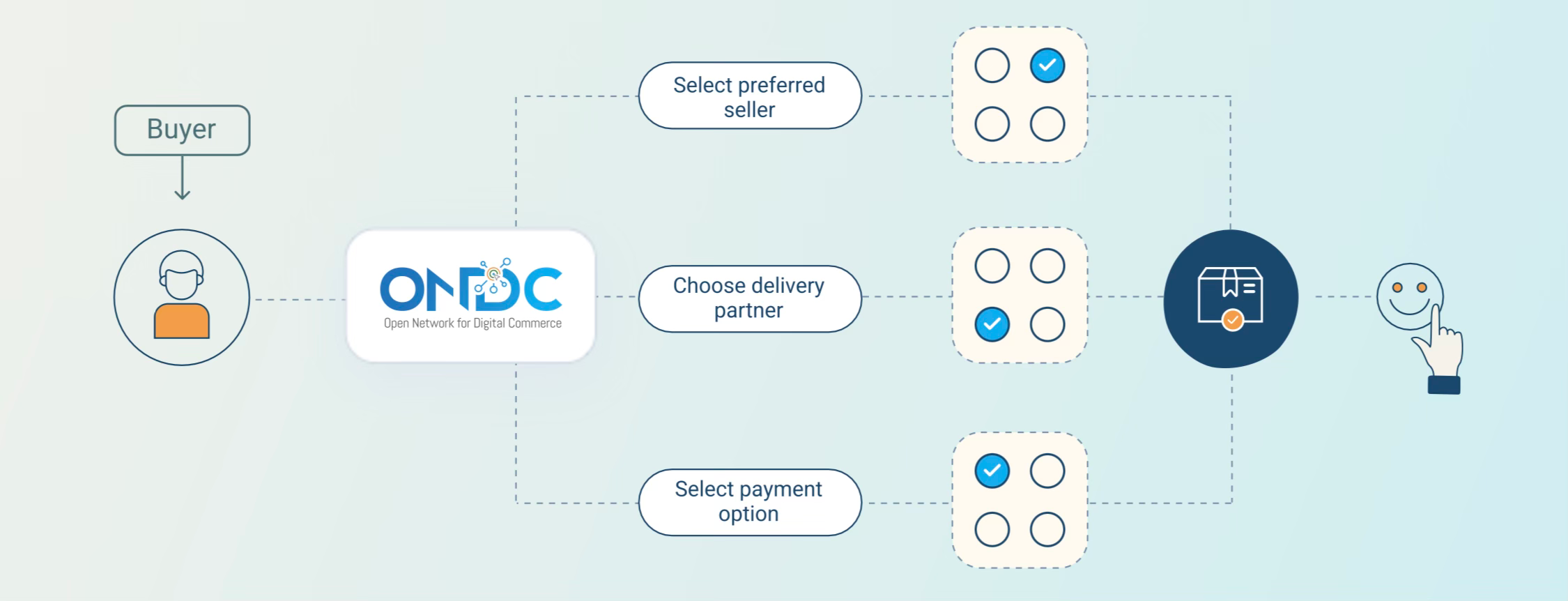
ONDC plans to implement a dynamic pricing model, digitized inventory management, and optimized delivery costs to reduce operating costs for everyone on the platform. ONDC will utilize a hyperlocal search engine model based on GPS proximity data as the default setting. Buyers can independently select the seller and logistics partner to complete their orders.
Hyperlocal SEO focuses on optimizing your online presence to target customers in your immediate area, such as your neighborhood or city block.
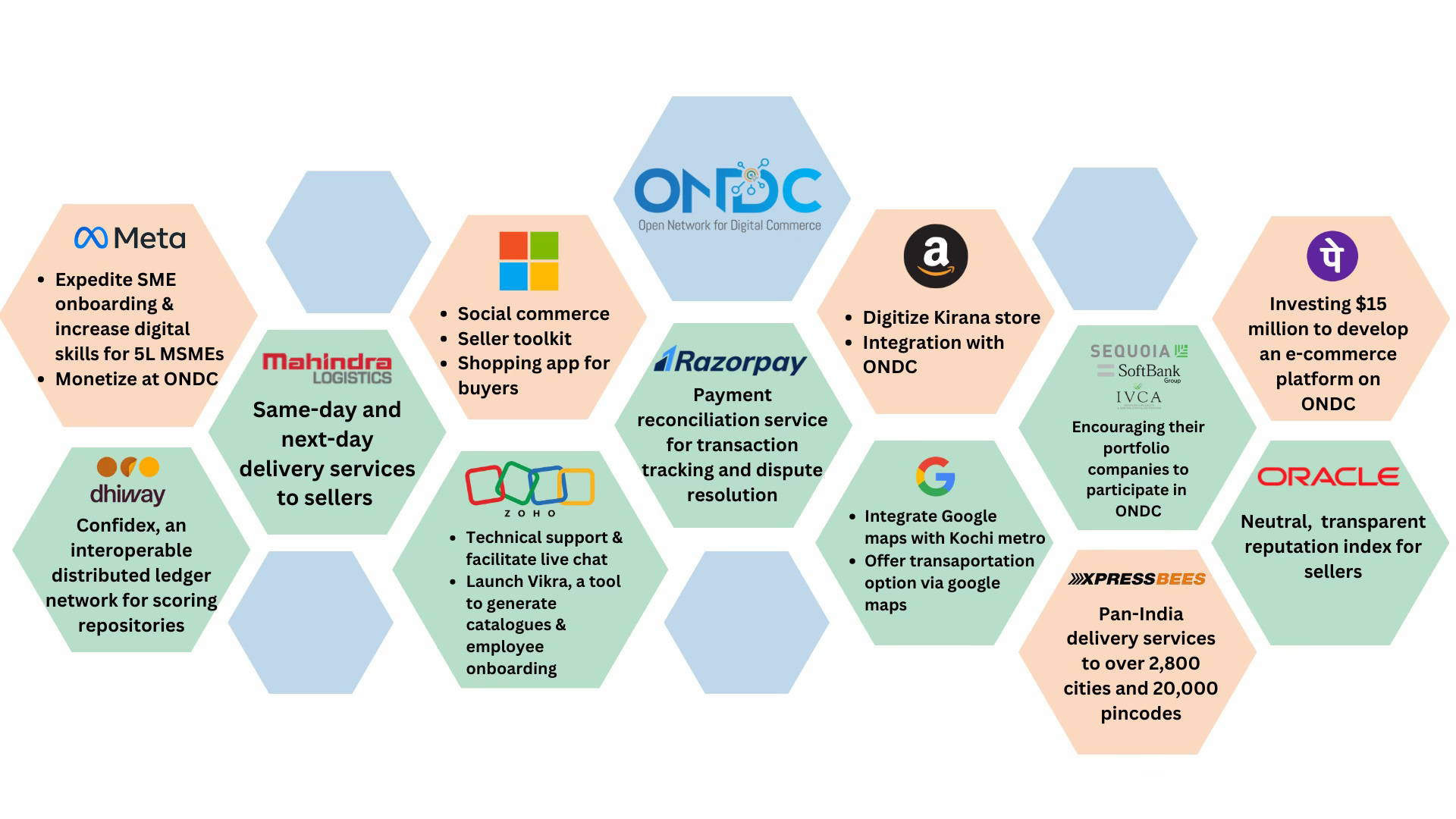
ONDC’s Industrial Working Group
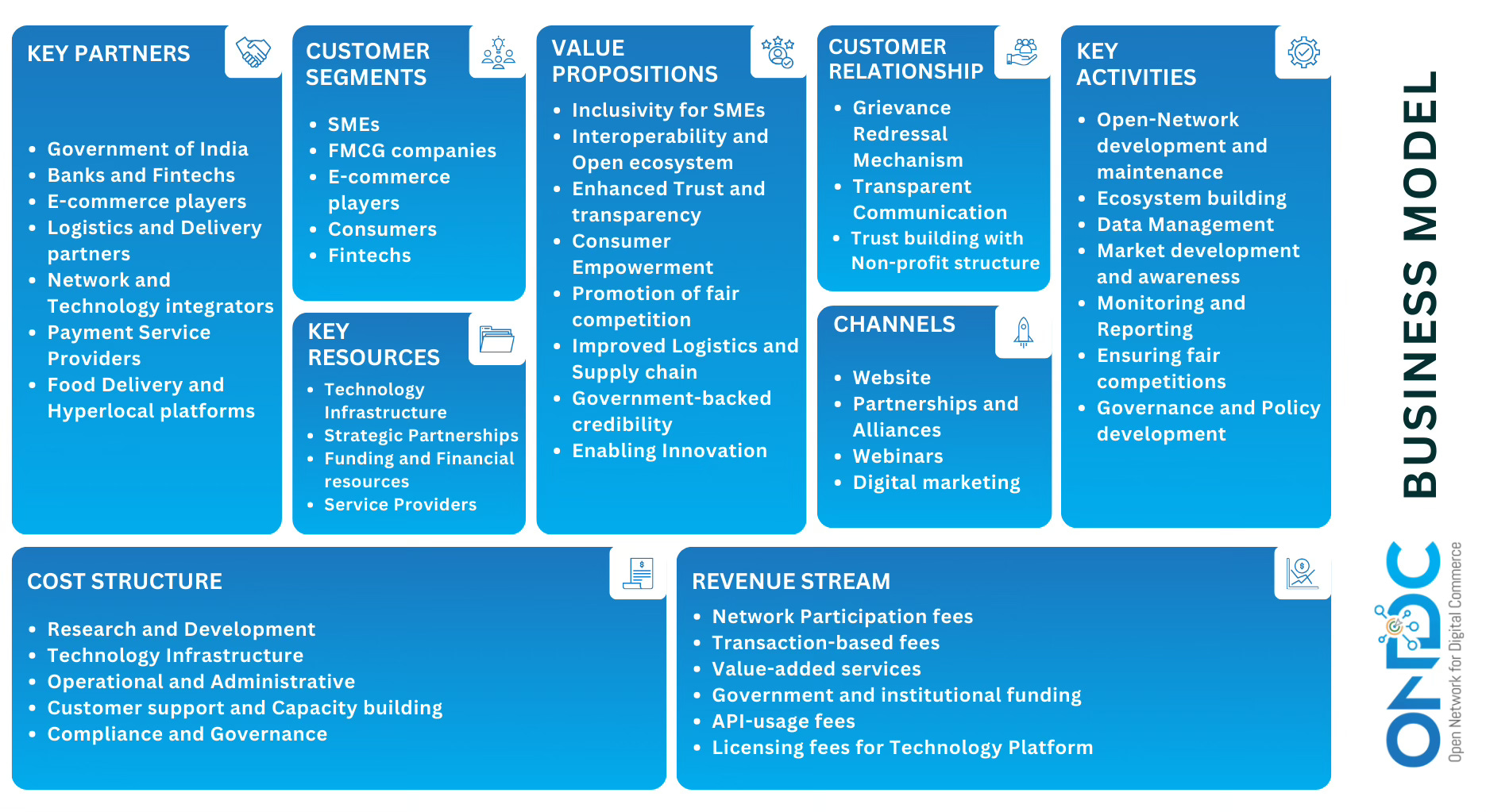
Business Model
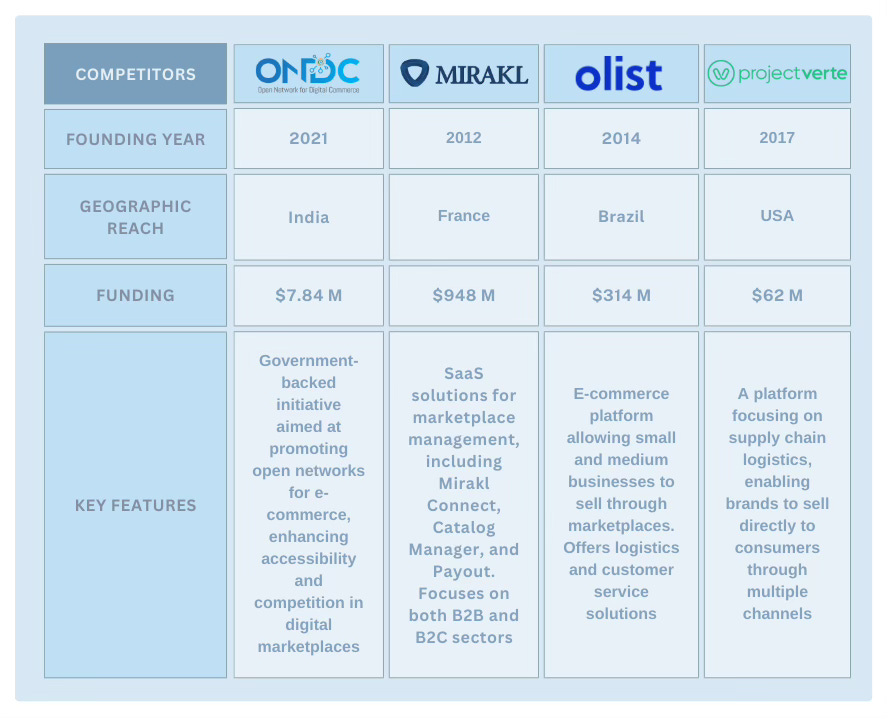
Competitive analysis
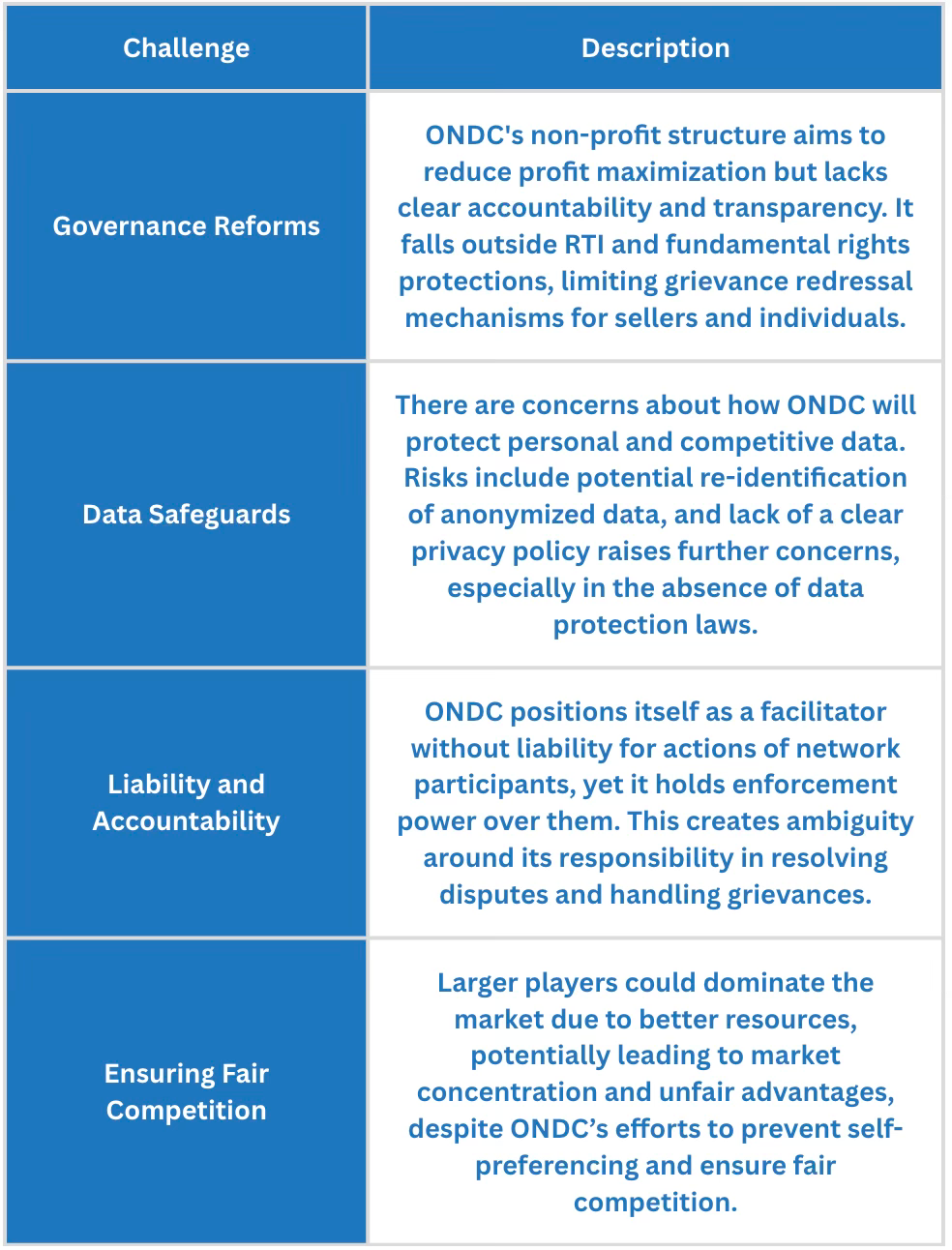
Challenges
Very informative!